Stopping Power That Handles Daily Traffic
Brake Services in Apopka for squeaking, grinding, and reduced stopping performance
Squeaking and grinding noises during braking indicate that pad material has worn to the point where metal backing plates contact rotors, which damages rotor surfaces and extends stopping distances in stop-and-go traffic. You need brake service when pedal feel changes, when vibration pulses through the steering wheel during braking, or when the vehicle pulls to one side instead of stopping in a straight line. 1st Performance Automotive inspects brake pads, rotors, calipers, and hydraulic components across all makes and models, then replaces worn parts to restore the stopping performance required for driver and passenger safety.
Brake inspections measure remaining pad thickness, rotor surface condition, and hydraulic fluid contamination to determine whether the system needs pad replacement, rotor resurfacing, or caliper service. Frequent commuting and stop-and-go traffic accelerate pad wear because repeated braking generates heat that degrades friction material faster than highway driving. Technicians check for uneven pad wear patterns that signal caliper problems or alignment issues affecting how brake force distributes across each wheel.
Schedule a brake inspection at the first sign of noise, vibration, or changes in pedal response to prevent rotor damage and maintain safe stopping distances.
What Proper Brake Service Requires
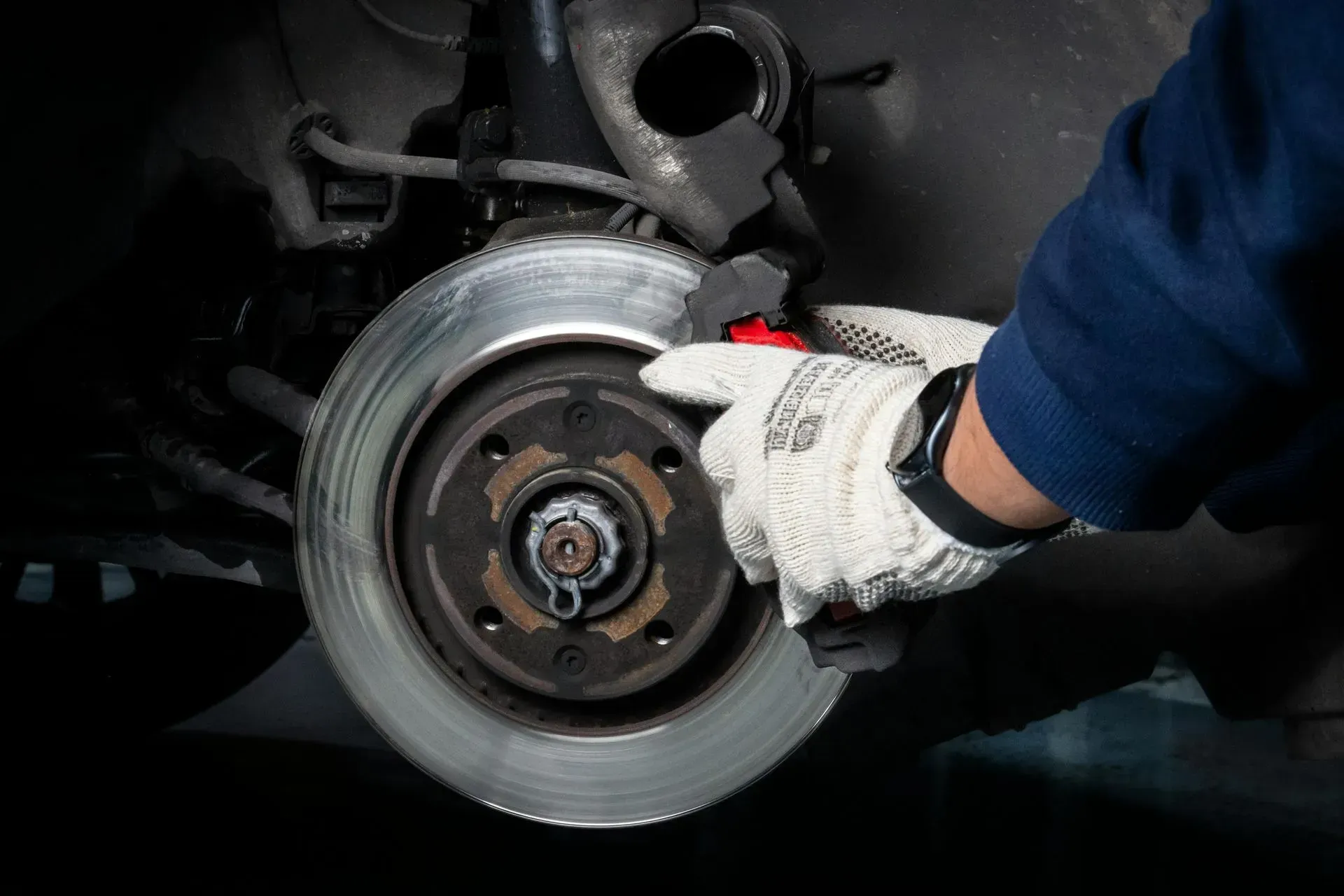
ASE Certified mechanics remove wheels to access brake assemblies, measure pad and rotor thickness with precision tools, and inspect caliper operation to confirm pistons retract fully after each brake application. Rotor condition determines whether resurfacing restores a smooth braking surface or whether replacement is necessary when thickness falls below minimum specifications. Brake fluid is tested for moisture content because absorbed water lowers boiling point and causes brake fade during sustained braking on hills or in heavy traffic.
You notice the brake pedal feels firm and responsive after service because new pads provide consistent friction against resurfaced or replaced rotors, eliminating the spongy or soft pedal feel caused by worn components. Stopping distances shorten to factory specifications once fresh pad material grips properly, and the vehicle tracks straight during braking instead of pulling toward one side due to uneven pad wear or sticking calipers. Noise disappears because new pads include wear indicators that remain silent until the next service interval approaches, and vibration stops once rotor surfaces are machined flat or replaced entirely.
Preventative brake maintenance includes bleeding hydraulic systems to remove air bubbles and moisture, lubricating caliper slide pins that allow pistons to move freely, and inspecting brake lines for corrosion or damage that could cause fluid leaks. Some brake services involve only pad replacement when rotors remain within thickness specifications, while others require complete rotor replacement when heat damage causes warping that cannot be corrected through resurfacing. Quality workmanship during brake service prevents comebacks for noise or vibration and extends the interval before the next service becomes necessary.
Answers to Frequent Brake Questions
Property owners and daily commuters in Apopka typically want to know what warning signs indicate immediate brake attention and how driving habits affect service intervals.
What causes brake pedal vibration during highway braking?
Warped rotors create uneven contact with brake pads, causing pulsing feedback through the pedal and steering wheel. Heat buildup from aggressive braking or prolonged downhill driving warps rotor surfaces, requiring resurfacing or replacement to eliminate vibration.
How does stop-and-go traffic affect brake lifespan?
Repeated braking in traffic generates continuous heat that accelerates pad wear and increases the risk of rotor warping. Commuters who frequently navigate congested routes may need brake service thousands of miles sooner than drivers who primarily travel highways.
Why do brakes squeak even after recent pad replacement?
Brake squeak can result from inadequate break-in procedures, incorrect pad material for your vehicle, or missing anti-rattle shims that dampen vibration. Some pad formulations naturally produce more noise than others, though persistent squeaking may indicate improper installation.
What brake fluid condition indicates it is time for replacement?
Brake fluid should appear clear or light amber; dark or murky fluid contains moisture and contaminants that reduce braking efficiency. Moisture absorption over time lowers the fluid's boiling point, which causes brake fade during hard stops or mountain driving.
How quickly should brakes be inspected after noticing grinding sounds?
Grinding indicates metal-to-metal contact between pad backing plates and rotors, which damages rotor surfaces rapidly and increases repair costs. Inspection within a few days prevents extensive rotor damage and maintains safe stopping performance.
1st Performance Automotive provides accurate brake inspections and quality workmanship that addresses current problems while preventing more extensive repair costs down the road. Arrange a brake evaluation if you experience any changes in stopping performance or notice warning sounds during daily driving.